2027 sounds like plenty of time away, until you remember how long it takes to change how a whole team works. CQC's survey on new dementia care guidance has now closed, and a formal consultation is planned for early 2027. That gives many providers a comfortable excuse to wait, then a rushed year of rewriting policies. You don't have to be one of them.
This post is about getting ready now, while it's still calm. We'll look at what the planned guidance means for you today, and why a completed training record won't be enough on its own. Then we'll walk through the evidence to gather first, how to make sure dementia training ends in a competency check, what a good check actually looks like, and how to show applied knowledge in your care records. From there, we'll pull it all into one inspection-ready evidence trail, with a Registered Manager checklist and a straight answer on where a learning platform helps and where it doesn't. If you've been looking for practical cqc guidance for providers on dementia, start here, and finish with your next steps before the 2027 consultation.
With the survey closed and consultation expected in early 2027, here is what that means for your team today.
If you search CQC guidance for providers regularly, you will have noticed dementia is not a passing theme. CQC published Health and social care support for people with dementia in May 2025, tagged across carer, dementia, healthcare and social care. That range signals a standing priority rather than a one-off campaign.
The next step is planned, not confirmed. CQC's dementia survey closed on 30 October 2026, with a formal consultation expected in early 2027. Treat 2027 as a working deadline, and check cqc.org.uk directly before quoting any date in your own documents.
What is not confirmed matters just as much: the final wording, and whether "competence" will appear at all. Any claim to know the exact language is interpretation, not policy.
The likely direction of travel is clear enough. Inspectors are moving towards asking whether staff can meet the specific needs of people living with dementia, not whether they finished a module. The practical upshot for a busy Registered Manager is simple: start building evidence now. A policy rewritten too early may not match what is finally published.
A certificate proves attendance. It does not prove that someone can adapt when a person no longer recognises their own kitchen, or becomes distressed during personal care.
Dementia needs are deeply individual. Communication style, routines, food and drink, pain, sleep, sensory changes and triggers all vary hugely from person to person, sometimes from morning to evening.
Inspectors look at more than paperwork. A training record sits behind only one strand of evidence, and rarely the strongest. What staff tell an inspector, and what they see happening on the day, carries real weight.
Learning also fades. Research on training transfer suggests learning fades without reinforcement, how quickly varies, and your records may quietly reflect that gap.
None of this is confirmed CQC policy yet. It is a reasonable reading of where the guidance looks to be heading, and preparing for it is sensible either way.
For training leads and HR teams, care providers face real obstacles, from turnover to time, so shift the question. Instead of asking has everyone done dementia training?, start asking how do we know each person can do it? That second question shapes everything that follows.
To answer it, you need five sets of evidence in hand before any check begins.
Training records for every staff member: course name, date completed, provider, content covered, and the refresher cycle you are working to.
Competency or assessment records: who was observed, by whom, when, what they did, and what happened next.
Supervision and appraisal notes where dementia practice, confidence or concerns came up, even briefly.
Care plans and daily records for people living with dementia, including communication and wellbeing sections that show how support is tailored.
A named owner, usually the Registered Manager or training lead, plus a review date you can point to.
If that lot lives across four spreadsheets and a filing cabinet, bring it into one view before you do anything else. Think of it as the good stuff, square by square: once the grid is visible, the gaps are too.
With your records in hand, start with the check itself. When someone finishes dementia training, book the competency check into their training plan rather than treating it as optional, aim for a few weeks later, while what they learned is still fresh, rather than treating it as optional.
Decide who observes. A senior carer, deputy manager or practice lead works well, and for at least some checks use someone other than the line manager, so the evidence isn't one person's view.
Watch real practice rather than setting a written test. How someone supports a person during meals, personal care, activities or a period of distress tells you far more than a quiz score.
Ask questions tied to the individual: "How would you support Irene if she became unsettled at bath time? What would you try if she refused food?" The answer should reference what you know about Irene, not the theory.
Record a simple outcome: what you observed, strengths, any gap found, and a date to revisit. A check with no written result is not evidence, however well it went.
A strong check has a shape to it. The observer watches a real interaction and writes down specific behaviours and choices: the exact words used, where the staff member stood, what they changed when the person responded. "Kind and patient" tells you nothing you can act on.
Questions should be about the person, not the condition. Ask how someone likes their tea, what they do when they are frightened, which words they use for the toilet. If the answer is generic, the knowledge is generic.
Then run scenarios that test whether learning transfers: someone refusing personal care, someone unsettled at night, someone with hearing loss in a noisy dining room.
Any gap found needs a short action, a date and a second observation. File the result next to the original training record so the loop is visibly closed.
Finally, keep the same four or five core areas for everyone. That way you can report competence at team level instead of telling individual stories.

Once the check is filed, ask whether your daily records back it up. Records should describe the approach used, not just the task completed. "Supported with breakfast" tells an inspector little; "used short sentences, sat at eye level and showed the photo album, which settled her and she ate most of the meal" shows the learning in practice.
Capture individualised communication approaches: the exact phrases, cues, objects or routines that work for that person, visible to staff on every shift. Note what did not work and what you tried instead; that is often the clearest evidence of reflective, person-centred practice, which sits at the heart of CQC's Regulation 9 on person-centred care.
Keep daily notes consistent between day and night staff and across bank or agency workers, so temporary staff can see communication and wellbeing preferences before they start. Review a sample each month and look for the gap. If your records describe tasks rather than people, your applied dementia knowledge evidence is thinner than you think. Check any example against current CQC guidance before relying on it.
Once your care records show applied knowledge, join the dots. Build one view per staff member that connects training, competency checks, supervision notes and care records, so when an inspector asks "show me how you know", you answer in one step, not three phone calls.
A simple matrix works: staff names down the side, core dementia competence areas across the top, with training dates and the most recent check for each. Do the same for the people you support: their needs, the approach agreed with them and their family, and where it is recorded day to day.
As a starting point, try sampling a small group of staff records and an equal number of care records each quarter, the exact number matters less than the habit. Log what you changed as a result. Evidence of action carries more weight than evidence of activity.
As noted, evidence you hold now will still count, rewriting policies before the final wording is published risks doing the work twice.
Work through this quarterly. Any "no" is your next action, not something to worry about quietly.
Training plus competency, both dated. Every staff member working with people living with dementia has a dementia training record and a completed competency check on file.
Checks were observation-based, not just a signature. Someone watched them support a person and recorded what they saw.
Gaps are closed, visibly. Each gap has an action, an owner and a revisit date, and you can show it was closed.
Supervision mentions dementia practice. Once in the current cycle is enough, even briefly.
Care records show the person. Individualised communication and wellbeing detail, not completed tasks alone.
Temporary staff are checked too. New starters, bank and agency staff are assessed before working unsupervised with people living with dementia.
Evidence is retrievable quickly, training, competency, supervision and care records in one place.
The routine outlives you. You know your next review date and who owns it, so it carries on without you remembering it every month.
Get these eight right and you hold something more useful than a policy: proof your team can do the job. So where does a learning platform genuinely help?
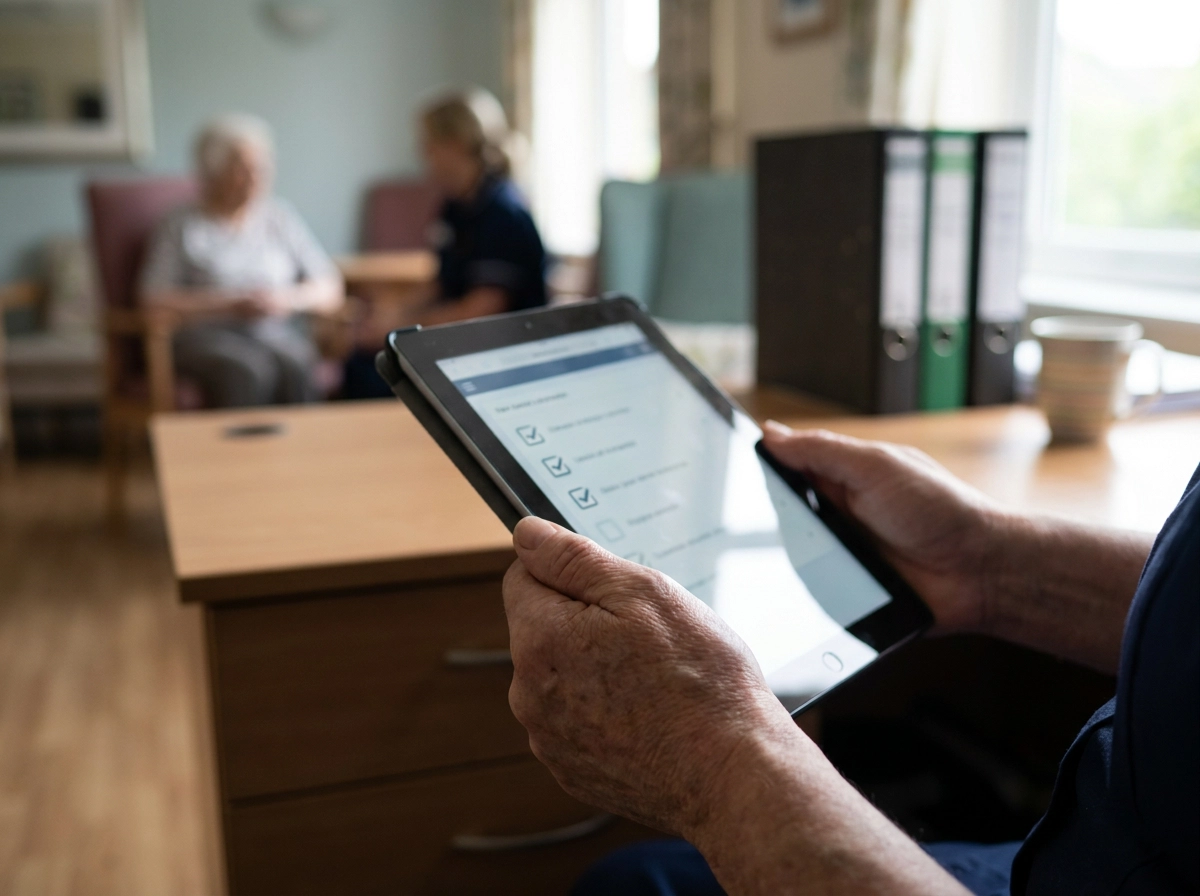
Checklist done. One caveat: a platform does not create good dementia care, your staff do. What it can do is make the evidence trail easy to hand over when a CQC inspector or new commissioner asks for it.
myAko is a UK learning and development platform built specifically for health and social care, used by around 1,500 care providers and 100,000 learners in domiciliary, residential and supported living care. CPD accredited dementia eLearning sits alongside competency assessments, supervisions and appraisals, learning pathways and compliance reporting in one system, so training and the check that follows it live together.
myAkoTQ, launching now, brings training and quality assurance together. It helps you evidence that your people can actually do the job, not just that they clicked through a course, and links that evidence to the care records showing it in practice.
Every client gets free UK-based chat and phone support, which our clients have rated 4.8/5 as a service measure; that is what we offer, not an outside quality benchmark. You can see who we work with, or read Our Message.
Comparing care training courses? Ask any provider how they evidence competence after the course ends, not just what it covers. The answer usually shows which option will help in 2027. Are you ready to access myAko?
So where do you start? Not with another course.
Add the check, not the course. Pick one team this month. Diarise a competency check within a few weeks of their next dementia refresher, and record a written outcome.
Pull your evidence into one place. A single spreadsheet is fine to begin with, as long as training, competency, supervision and care records sit together.
In the next quarter, sample a handful of staff and care records and note honestly where records describe tasks rather than people.
Revisit in early 2027. Once CQC publishes the formal consultation, you can adjust your wording quickly, knowing the proof you already hold still stands.
CQC's dementia guidance asks for proof of what your team can do, not just what they have completed. You have already mapped the gap. The work between now and 2027 is building evidence you can trust, and a platform like myAko can help you keep it in one place.

Our Learning Management System is used by hundreds of Health & Social care providers - book a demo now!
One of the team is ready to show you how everything works and answer any questions you might have!
Choose a Time Slot
Join Zoom Call
45 Minute Demo
Ask Questions


